How to Choose the Right Leather Glove Manufacturer for Your Business

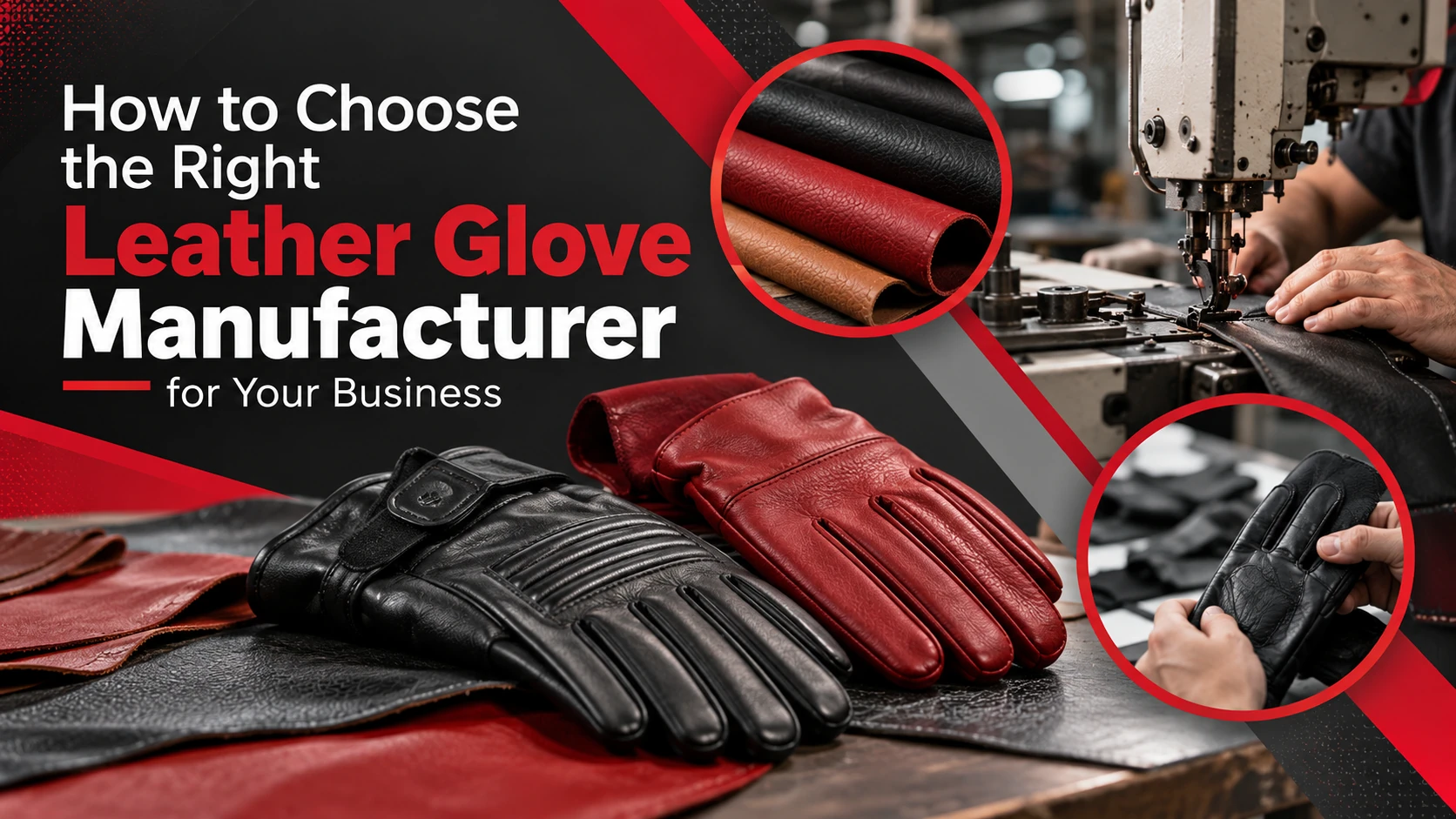
Choosing a leather glove manufacturer is one of the most important sourcing decisions a glove brand, distributor or safety supplier will make. The factory you pick shapes your product quality, pricing, delivery reliability and, in the end, how your customers feel about your brand.
Whether you need work gloves, industrial safety gloves, driving gloves or a fully custom range, this guide explains how to choose a leather glove manufacturer step by step, with the questions to ask, the checks to run and the warning signs to watch for before you commit to a bulk order.
- Confirm leather type, grade and thickness in writing.
- Check experience with your exact glove category.
- Get MOQ, capacity and lead time before negotiating price.
- Ask how quality is checked at each stage, not only at the end.
- Approve a physical sample before any bulk production.
- Choose a supplier who communicates clearly and handles export paperwork.
Why Choosing the Right Leather Glove Manufacturer Matters
Leather gloves are judged on the job, not on the shelf. Leather quality, stitching, fit, finishing and overall construction decide whether a glove lasts a week or a season. For safety gloves, they also decide whether the wearer is properly protected.
A reliable manufacturer delivers the same quality on every order, meets your specification without shortcuts and scales with your volumes. The wrong one can leave you with inconsistent batches, missed shipping dates and returns that damage your reputation with your own customers.
1. Check the Quality of the Leather
Leather is the foundation of every glove, so it should be the first thing you evaluate. Different leathers offer different levels of softness, strength, flexibility and heat or abrasion resistance. A professional manufacturer should explain the options clearly and recommend a material based on how the gloves will be used.
When you review a supplier, ask about:
- Leather type and grade
- Thickness in millimetres
- Softness and flexibility
- Abrasion and tear resistance
- Colour and finish options
- Consistency between batches
| Leather | Main strength | Typical use |
|---|---|---|
| Cowhide grain | Durability and abrasion resistance | General work and driver gloves |
| Split cowhide | Heat and spark resistance, lower cost | Welding and heavy-duty gloves |
| Goatskin | Dexterity with good strength | Assembly and precision work |
| Sheepskin | Softness and close fit | Comfort and fine-handling gloves |
If your buyers work in high-heat environments, for example, look closely at how a factory builds its split leather welding gloves with Kevlar stitching, because thread and lining matter as much as the leather itself.
2. Look at Manufacturing Experience
Experience is one of the clearest signals when choosing a custom leather gloves manufacturer. A factory that has produced gloves for many years understands glove patterns, stitching requirements, size grading and finishing, and it has already solved the problems you have not yet run into.
Ask potential manufacturers about:
- Years in glove manufacturing
- Glove types they currently produce
- Industries they already supply
- Whether cutting, stitching and finishing are done in-house or subcontracted
- Experience with buyers in your country or region
A factory that already makes your category, such as double palm rigger gloves for construction or cowhide driver gloves for logistics work, will need far less development time than one learning it from scratch.
3. Ask About Customisation Options
Most growing glove businesses need products that match their own brand and their customers’ specifications. Before you shortlist a manufacturer, confirm whether they support:
- Custom glove designs and patterns
- A choice of leather types
- Custom leather and thread colours
- Extended or special sizing
- Embossed, printed or embroidered logos
- Woven labels and hang tags
- Branded retail packaging
- Different cuffs, linings and stitching
If you are building your own brand, work with a supplier that offers OEM and private label work glove manufacturing as a dedicated service rather than an afterthought. It usually means a proper sampling and approval process is already in place.
4. Check Production Capacity and MOQ
Capacity and minimum order quantity (MOQ) should be clarified before you start negotiating price. A supplier that cannot handle your volume, or needs far more than you can sell, is not the right fit no matter how good the quote looks.
A manufacturer should clearly explain:
- MOQ per style, colour and size
- Daily or monthly production capacity
- Sample order options and cost
- Bulk production timelines
- How they handle repeat and seasonal orders
Knowing these details early helps you avoid delays, split shipments or last-minute surprises when your peak season arrives.
5. Review Quality Control Processes
Consistent quality is essential when you buy leather gloves in bulk. The best manufacturers build quality checks into every stage of production instead of relying on a single inspection at the end. A strong process usually looks like this:
- Incoming leather check: hides graded for thickness, defects and colour.
- Cutting check: panels measured against the pattern.
- In-line stitching check: seam strength, stitch density and loose threads.
- Sizing and symmetry check: each size measured and pairs matched.
- Compliance testing: applicable lines tested to standards such as EN388 or ANSI.
- Final audit: finish, logo placement, labelling and packaging accuracy verified before shipment.
Ask any supplier to walk you through their glove manufacturing and quality control process. If they cannot describe it clearly, treat that as a warning sign.
6. Compare Pricing Carefully
Price matters, but the lowest quotation is rarely the best value. Unusually low prices often reflect thinner leather, weaker thread, fewer quality checks or cheaper packaging, and those savings tend to come back as returns and complaints.
When comparing leather glove suppliers, compare the full specification, not just the unit price. A quote should state:
| What the quote should include | Why it matters |
|---|---|
| Leather type, grade and thickness | The biggest driver of cost and durability |
| Lining, thread and reinforcement | Affects comfort, heat resistance and glove life |
| Customisation and branding | Logos, labels and colours add cost |
| MOQ and price breaks | Shows how price changes with volume |
| Lead time | Helps you plan stock and cash flow |
| Packaging and carton details | Affects freight cost and retail readiness |
| Shipping terms (FOB, CIF and so on) | Decides who pays for which part of transport |
7. Request Samples Before Bulk Production
A sample shows you what a manufacturer can actually produce, not just what they promise. Before placing a large order, request a sample and check:
- Leather feel and thickness
- Fit across sizes
- Stitching neatness and strength
- Comfort during use
- Durability in real tasks
- Colour accuracy
- Logo placement
- Overall finishing
Test samples in real working conditions where you can. For custom products, the sample stage is also the right time to request changes, because adjustments after bulk cutting starts are slow and expensive.
8. Consider Communication and Customer Service
Good communication keeps production on track. A reliable manufacturer discusses your specification clearly, answers questions accurately, sends production updates and tells you early if anything changes.
Pay attention to how quickly and precisely a supplier responds during quotation and sampling. The way they communicate before you pay is usually the best they will communicate after. This matters even more for international orders across time zones.
9. Check Export and International Order Experience
If you are importing gloves, your manufacturer’s export experience matters as much as their stitching. Ask whether they regularly ship to your market and whether they can prepare the packaging, carton marking, certificates and shipping documents your customs process requires.
For buyers comparing leather glove manufacturers in Pakistan, export experience is often what separates a workshop from a dependable long-term supplier. You can read more about why international buyers source leather gloves from Sialkot in our earlier guide.
- Refuses to send samples, or the sample differs from photos.
- Cannot name the leather grade or thickness.
- Quotes without asking about your specification.
- No clear answer on MOQ or lead time.
- Claims certifications but cannot share certificates.
- Slow or vague replies during quotation.
Why Sialkot Is Known for Leather Glove Manufacturing
Sialkot has a long-established manufacturing and export industry for leather products and gloves. The city brings together skilled workers, leather suppliers, stitching units, packaging companies and export services in one industrial region, which shortens lead times and simplifies customisation.
Even so, not every factory in the city works to the same standard. When shortlisting Sialkot leather glove manufacturers, apply every check in this guide to each supplier individually.
Why Choose Shakeel & Sons?
Shakeel & Sons has manufactured leather safety gloves in Sialkot since 1998. Every stage, from leather selection and cutting to stitching, inspection and export packaging, runs in-house at our own facility, so the quality you approve at sample stage is the quality you receive in bulk.
Our facility is ISO 9001:2015 certified, and applicable product lines are tested to CE, EN388 and ANSI standards. We supply distributors, traders and private label brands across a full range of leather PPE gloves, including leather assembly gloves for mechanics, and build gloves to suit the needs of construction, oil and gas, welding and logistics buyers.
Ready to Evaluate Us as Your Supplier?
Send us your glove style, target quantity and branding needs. We will reply with a specification, MOQ, lead time and sample plan so you can compare us properly.
Request a quote and sampleFrequently Asked Questions
How do I choose a leather glove manufacturer?
Evaluate leather quality, experience in your glove category, customisation options, MOQ and capacity, quality control, sample quality, pricing detail, communication and export experience. Always approve a physical sample before bulk production.
What questions should I ask a glove manufacturer before ordering?
Ask about leather type and thickness, MOQ, production capacity, lead time, quality checks, certifications, sampling, customisation, packaging and shipping terms.
Why should I request samples before bulk production?
Samples let you check leather feel, fit, stitching, comfort, colour and logo placement. They are also the cheapest point to request changes before bulk cutting begins.
What is a typical MOQ for leather work gloves?
MOQ varies by manufacturer, style and customisation. At Shakeel & Sons, standard catalogue styles typically start at 100 dozen pairs per style.
Is the cheapest leather glove supplier the best choice?
Not usually. Very low prices can mean thinner leather, weaker stitching or fewer quality checks. Compare full specifications and quality processes, not only unit price.
Which certifications should a leather work glove manufacturer have?
Common ones include ISO 9001 for the factory’s quality system, CE marking, EN388 for mechanical protection and ANSI ratings for the US market. Ask to see the certificates for the specific products you are buying.
Final Thoughts
Choosing the right leather glove manufacturer takes more than comparing quotations. Evaluate leather quality, manufacturing experience, customisation, capacity, quality control, samples, communication and export experience before you place a bulk order.
Taking that time up front reduces quality problems and builds a supply relationship you can rely on. Whether you are launching a new glove line or replacing an existing supplier, a manufacturer that understands your requirements will make a real difference to your business.