How to Choose Construction Work Gloves

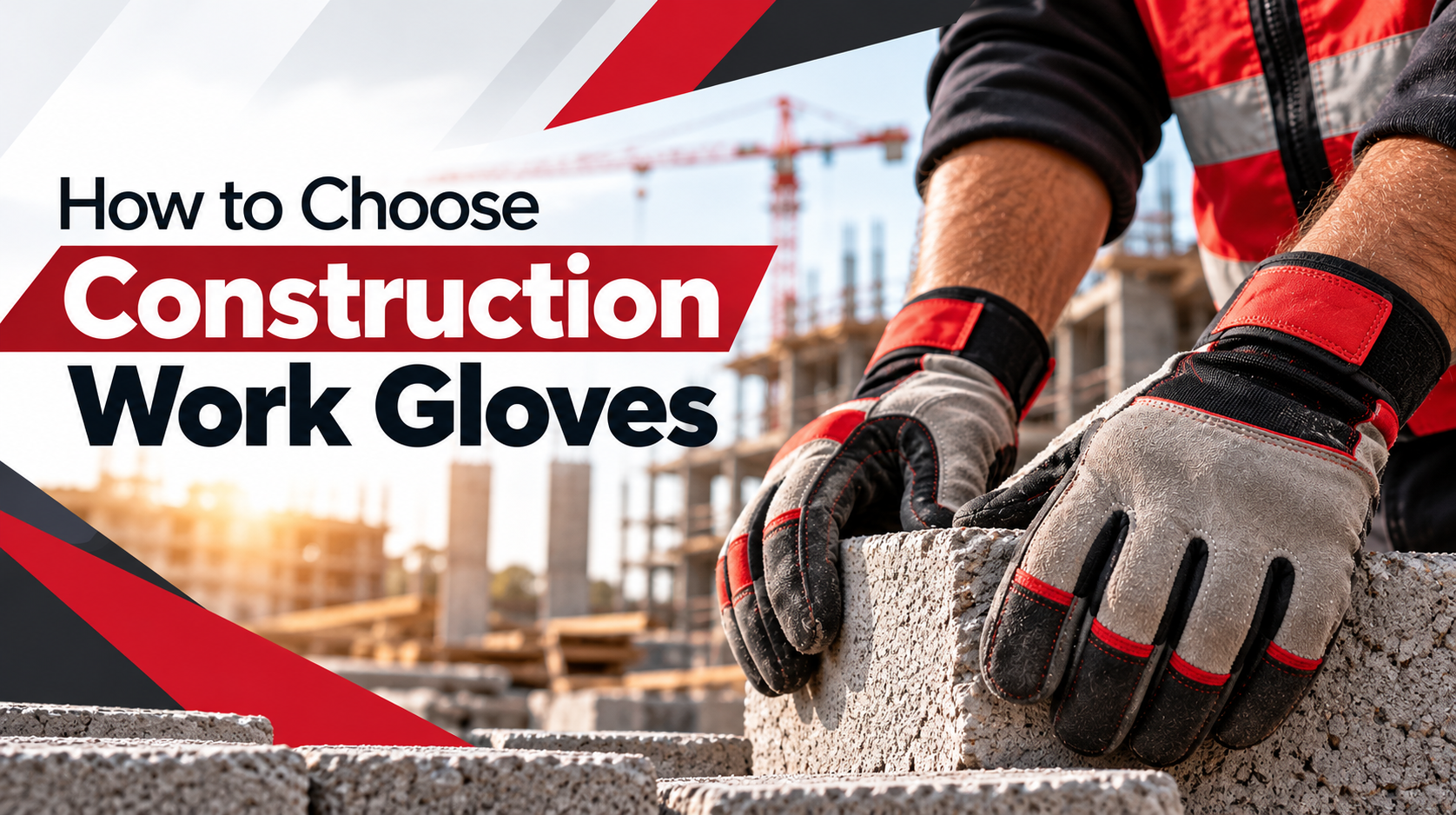
Construction workers handle rough timber, bricks, concrete, sheet metal, heavy tools and machinery every day. Without the right hand protection, each of these tasks carries a real risk of cuts, abrasions, punctures, crush injuries and splinters.
Yet no single glove suits every job on a construction site. Some tasks call for tough leather, others need a certified cut rating, a stronger grip or back-of-hand impact protection. This guide explains how to choose construction work gloves by hazard, material, safety rating, fit and durability, so contractors, PPE distributors and industrial buyers can equip their crews with confidence.
- Start with a hazard assessment, not a product catalogue.
- Match the material to the task: leather, coated, cut-resistant or impact-protective.
- Read the full EN388 or ANSI marking, not just one number.
- Get the fit right, because a loose glove is a safety risk.
- Test samples on site before ordering in bulk.
- Inspect gloves regularly and replace them once damaged.
Why Choosing the Right Construction Work Gloves Matters
Construction work gloves protect hands against everyday site hazards while helping workers keep a secure, comfortable hold on tools and materials. The right gloves can:
- Reduce the risk of cuts, scratches and abrasions.
- Protect hands when handling rough timber, bricks, blocks and metal.
- Improve grip on tools, pipes and building materials.
- Give better control during repetitive manual work.
- Stay comfortable through long shifts, so workers keep them on.
- Lower replacement costs when the glove is actually suited to the job.
The protection level you need depends on the work environment, the materials being handled and the specific hazards identified on site.
1. Identify the Main Construction Hazards
The first step in choosing construction safety gloves is understanding what workers’ hands are exposed to during their daily tasks.
Cuts and Sharp Edges
Sheet metal, steel sections, metal studs, glass and other sharp materials can cause deep cuts. These tasks may need gloves with a tested cut-resistance rating suited to the material and level of risk.
Abrasion and Rough Surfaces
Bricks, concrete blocks, timber and rough aggregates wear down skin and gloves through constant friction. Durable leather or a suitable abrasion-resistant coating works well here.
Impact and Pinch Points
Demolition, equipment handling and moving heavy loads expose hands to knocks and crush injuries. Reinforced palms or tested back-of-hand impact protection may be required.
Wet and Slippery Conditions
Rain, mud, moisture and wet materials make tools hard to hold securely. Gloves with an appropriate grip surface or water-resistant properties help workers keep control.
Gloves should always be selected based on a workplace hazard assessment. No single glove protects against every construction hazard, and a glove chosen for one risk may be unsuitable for another.
2. Choose the Right Material for the Job
Glove material decides durability, flexibility, grip and the type of protection a glove can offer. Knowing the main options makes purchasing decisions far simpler.
Leather Construction Work Gloves
Leather remains the go-to choice for general construction, material handling, carpentry and other heavy manual work. It offers:
- Strong abrasion resistance
- Durability for repeated use
- Protection from splinters and rough edges
- Natural heat resistance
- Comfort that improves with wear
- Options for heavy-duty applications
Cowhide is widely used for general heavy-duty work, while goatskin gives a softer, more flexible feel for tasks that need finer hand movement. Real-world performance always depends on the leather grade, thickness, glove pattern and stitching. For high-risk lifting and rigging tasks, many sites standardise on leather rigger gloves for scaffolding and material handling, while operators of plant and machinery often prefer cowhide driver gloves for equipment operators for their feel on controls.
| Leather | Strength | Best on site for |
|---|---|---|
| Cowhide grain | Durability and abrasion resistance | General construction, driving and operating equipment |
| Split cowhide | Toughness, heat resistance, lower cost | Heavy handling, demolition and welding |
| Goatskin | Flexibility with good strength | Carpentry, fitting and installation |
| Double palm leather | Extra palm reinforcement | Rigging, scaffolding and rough materials |
Coated Work Gloves
Coated gloves use a knitted or textile liner with a protective coating on the palm and fingers. Common coatings include:
- Nitrile: good abrasion resistance and grip in many oily or industrial handling tasks.
- Latex: strong grip on suitable dry or wet surfaces.
- Polyurethane (PU): a thin, flexible feel for tasks that need dexterity.
The right coating depends on the surfaces being handled and site conditions. A coating is not automatically resistant to every chemical or liquid, so always check the manufacturer’s specification.
Cut-Resistant Gloves
Cut-resistant gloves are built for sharp-edged materials such as sheet metal, ductwork and certain installation work. Always check the stated cut rating and the standard it was tested to. A glove that looks thick is not necessarily cut-resistant.
Impact-Resistant Gloves
Some construction gloves add padded or moulded protection across the knuckles and back of the hand. These suit tasks with impact and pinch hazards. Look for independently tested impact claims rather than judging by appearance.
For hot work on site, such as cutting and welding steel, dedicated heat-resistant leather welding gloves are a separate category and should not be replaced with general-purpose work gloves.
3. Match Construction Gloves to the Task
Different construction tasks need a different balance of protection, grip and flexibility. Use this table as a starting point:
| Construction task | Recommended glove features |
|---|---|
| General construction and material handling | Durable leather or a suitable coated glove |
| Carpentry and framing | Flexible gloves with abrasion protection and good dexterity |
| Metal and sheet-metal handling | Gloves with a suitable cut-resistance rating |
| Demolition work | Durable, reinforced gloves matched to impact and abrasion risks |
| Equipment and plant operation | Secure grip, durability and impact protection where needed |
| Roofing work | Secure grip, abrasion resistance, heat and weather suitability |
| Scaffolding work | Secure grip, close fit and durable palm protection |
| Precision installation | Lightweight gloves that balance dexterity with required protection |
These are general recommendations, not a replacement for assessing real site hazards. A worker handling sharp metal needs different protection from one carrying timber or fitting small fasteners. For close-tolerance fitting, lightweight leather assembly gloves for installation work give the feel needed without leaving hands bare.
4. Check Safety Standards and Protection Ratings
Safety ratings let buyers compare glove performance against defined test methods instead of marketing claims.
EN 388: Mechanical Protection
EN 388 is the widely used European standard for gloves protecting against mechanical risks. Depending on the marking, it reports abrasion, blade cut, tear and puncture resistance, plus an ISO cut rating (A to F) and an impact result where tested. Always read the full marking and technical file rather than assuming one number covers every hazard.
ANSI/ISEA 105: Cut Resistance
ANSI/ISEA 105 classifies several glove performance properties, including cut resistance. Its cut scale runs from A1 to A9, with higher levels showing greater resistance under the specified test. Choose the level based on how sharp the materials are and how the task is done.
Impact Protection
Where hand-impact risks exist, check whether the glove has been tested under an applicable standard, such as ANSI/ISEA 138 or the EN 388 impact test.
Cut, abrasion, puncture and impact resistance measure different things. A high score in one does not make up for a low score in another.
5. Select the Correct Size and Fit
Even a durable, highly rated glove performs poorly if it does not fit. A loose glove reduces control and can snag on machinery. A tight glove restricts movement, causes fatigue and puts extra strain on the seams. Before ordering, check:
- Finger length: fingers should fit fully without excess material at the tips.
- Palm fit: snug and secure without pressure points.
- Flexibility: workers should grip tools and bend fingers naturally.
- Cuff design: the cuff should suit the task and give enough wrist coverage.
- Sizing consistency: confirm the manufacturer’s size chart before bulk orders.
For distributors and large contractors, confirming that a full size range is available across the workforce also simplifies purchasing and stock control.
6. Consider Comfort, Grip and Durability
Workers wear gloves for hours at a time. If gloves are uncomfortable, they come off, and protection disappears with them.
- Grip: the palm surface should suit the materials and conditions, whether that is timber, pipe, block or wet steel.
- Breathability: breathable designs help manage heat and sweat in warm climates and long shifts.
- Durability: reinforced palms, strong stitching and the right leather extend service life in demanding work.
- Dexterity: fastener and fitting work needs thinner, flexible gloves, while heavy handling can trade some flexibility for protection.
The best construction glove is not the thickest one. It is the glove that gives the required protection while staying practical for the task.
7. Evaluate Quality Before Buying in Bulk
For contractors, PPE distributors and industrial buyers, glove selection goes well beyond comparing unit prices. A sensible bulk buying process looks like this:
- Define the application: list the tasks, hazards and required ratings.
- Review specifications: leather type and thickness, lining, stitching and reinforcement.
- Request documentation: test reports and certificates for the exact products quoted.
- Test samples on site: check comfort, grip, fit and wear under real working conditions.
- Confirm commercial terms: sizes, MOQ, lead time, packaging and repeat-order consistency.
- Agree branding needs: logos, labels and packaging for importers and private label buyers.
Importers building their own range should ask whether the supplier offers private label construction gloves with your own branding, and use our checklist for choosing a leather glove manufacturer to compare suppliers properly.
8. Know When to Replace Construction Work Gloves
Work gloves are protective equipment and should be inspected regularly. Once damaged, they may no longer give their rated protection. Replace gloves when you notice:
- Holes, tears or split seams
- Worn or thinning palms
- Cracked or peeling coatings
- Reduced grip
- Damaged protective parts
- Poor fit after long use
Follow the manufacturer’s care instructions and your site’s replacement procedure. Gloves exposed to hazardous substances or contamination may need replacing immediately under the applicable safety guidance.
9. Why Manufacturer Selection Matters for Bulk Buyers
Choosing a reliable work glove manufacturer matters as much as choosing the right glove. Distributors, wholesalers, contractors and private label brands should look for a supplier that can explain specifications, share quality documentation and hold the same standard order after order. When comparing manufacturers, consider:
- Experience in leather safety gloves and industrial hand protection.
- A product range covering different construction applications.
- Quality control at each stage of production.
- Available sizes, designs and customisation.
- Export experience and clear communication with international buyers.
- Reliable production schedules for repeat orders.
Many buyers start their search in Pakistan because of Sialkot’s established leather glove manufacturing industry, but every factory should still be judged on its own merits.
Construction Gloves from Shakeel & Sons
Shakeel & Sons has manufactured leather safety gloves in Sialkot, Pakistan, since 1998. Leather selection, cutting, stitching, inspection and export packing all run through our in-house cutting, stitching and inspection process, so the glove you approve at sample stage is the glove delivered in bulk.
Our facility is ISO 9001:2015 certified, and applicable product lines are tested to CE, EN388 and ANSI standards. Explore our leather safety gloves for construction sites or see how we support hand protection for construction and heavy industry.
Need Construction Gloves in Bulk?
Tell us the tasks, required ratings, sizes and quantities. We will recommend suitable styles and send a specification, MOQ, lead time and sample plan.
Get a bulk quote for construction glovesFrequently Asked Questions
How do I choose construction work gloves?
Start with a hazard assessment, then match the glove material and safety rating to the task. Check fit, grip, comfort and durability, and test samples on site before ordering in bulk.
Are leather gloves good for construction work?
Yes. Leather gloves offer strong abrasion resistance, durability and protection from rough surfaces and splinters, which makes them suitable for many general and heavy-duty construction tasks. Sharp-edge work may need a glove with a tested cut rating.
What does EN388 mean on work gloves?
EN388 is a European standard for gloves protecting against mechanical risks. The marking shows performance levels for abrasion, cut, tear and puncture resistance, and may include an ISO cut level and impact result.
What cut level do construction gloves need?
It depends on the task. Handling sheet metal or sharp steel usually needs a higher rating than general material handling. Base the level on a hazard assessment and check the ANSI/ISEA 105 or EN388 marking.
How often should construction gloves be replaced?
Replace gloves as soon as they show holes, worn palms, split seams, damaged coatings, reduced grip or poor fit. Inspect them regularly rather than waiting for a fixed time period.
Can I buy construction gloves in bulk with my own branding?
Yes. Many manufacturers offer OEM and private label production. At Shakeel & Sons, standard catalogue styles typically start at 100 dozen pairs per style, with logos, labels and packaging available to order.
Conclusion
Choosing construction work gloves starts with understanding the hazards on site. Material, cut resistance, impact protection, grip, fit and durability all play a part in selecting the right product. Leather gloves suit many heavy-duty applications, while coated, cut-resistant or impact-protective designs may suit particular tasks better.
For contractors, PPE distributors and industrial buyers, supplier reliability matters just as much. By matching glove performance to the job, checking the ratings and testing samples before bulk orders, you can make better decisions about protecting your workers’ hands.