Heat-Resistant Gloves

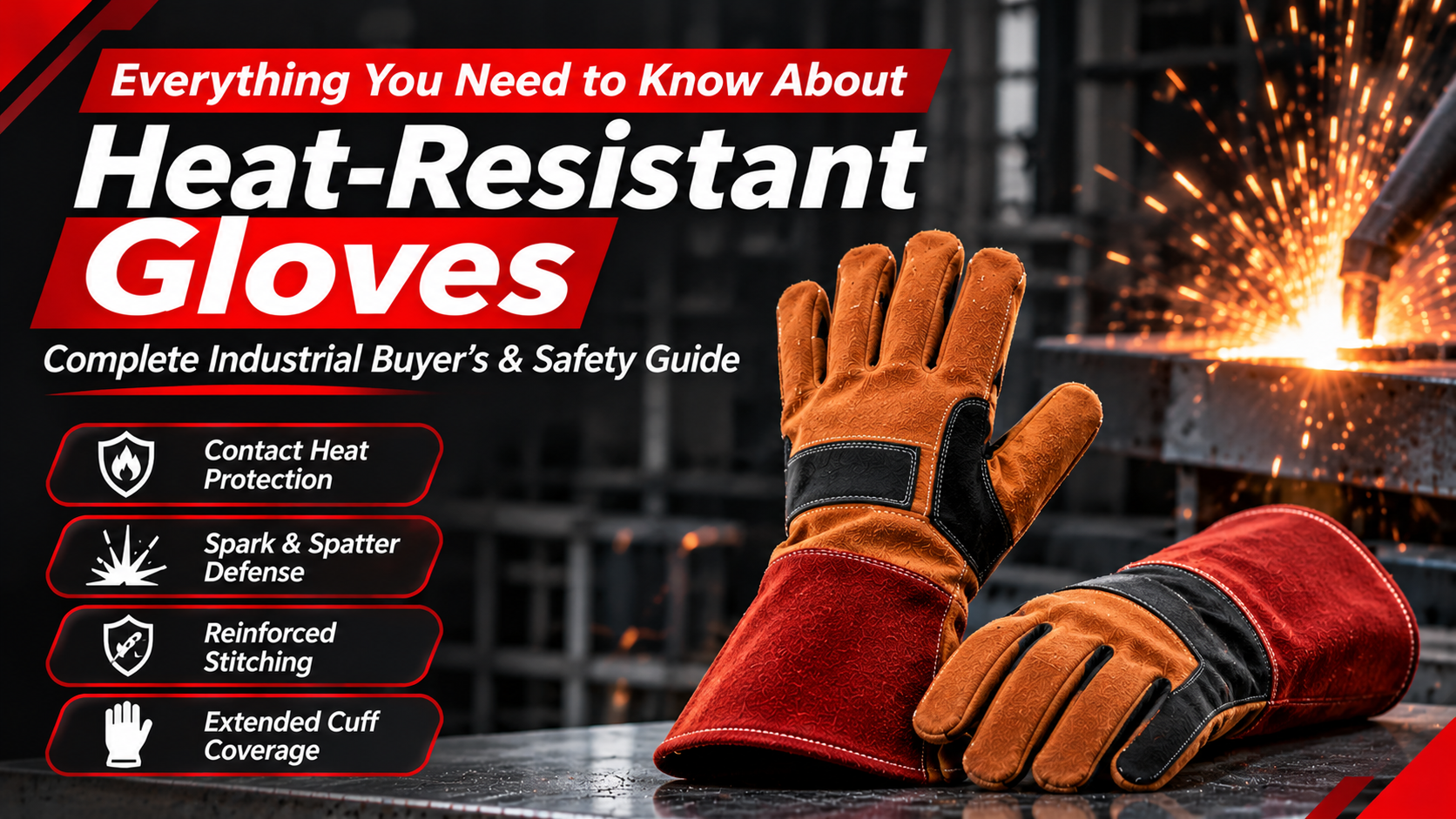
Thermal injuries remain one of the most frequent and preventable workplace hazards across welding, metal fabrication, oil and gas, construction, and heavy mining. Whether workers are handling open arcs, hot metal components, sparks, or high-abrasion surfaces, selecting the right heat-resistant gloves is a critical balance between thermal protection, mechanical durability, and manual dexterity.
Drawing on proven industrial manufacturing standards and real-world hide craftsmanship, this guide explains how gloves work, the genuine leather materials and stitching behind them, international compliance standards, and how to source reliable bulk PPE for demanding trades.
What Are Heat-Resistant Gloves and How Do They Work?
Heat-resistant gloves are heavy-duty personal protective equipment (PPE) engineered to shield the hands, wrists, and forearms from extreme temperatures, sparks, and thermal contact. Unlike standard work gloves, industrial heat-resistant gloves are constructed using thick, specially tanned hides, insulating inner linings, and reinforced stitching that resist charring, shrinking, or premature seam failure under intense heat.
Built for long shifts in rugged trade environments, authentic leather heat-resistant gloves create a durable physical barrier that slows heat conduction while protecting against cuts, tears, and severe surface abrasion.
Thermal & Mechanical Hazards Heat-Resistant Gloves Protect Against
In industrial environments, thermal risks rarely happen in isolation. They almost always occur alongside sharp metal edges, heavy rigging, and sparks. Quality heat-resistant gloves are designed to counter four core workplace hazards:
- Contact Heat: Direct physical handling of hot steel, freshly welded joints, heated pipes, and heavy machinery parts. Thick split and full-grain leather hides slow heat transfer from the hot surface to the skin.
- Sparks & Welding Spatter: Intense showers of hot metal sparks generated during MIG, TIG, and Stick welding or metal grinding. Naturally flame-resistant leather sheds sparks without melting or dripping.
- Radiant & Convective Heat: Prolonged exposure to radiant arc heat and hot ambient air near furnaces, boilers, and petrochemical lines. Multi-layered linings and extended gauntlet cuffs insulate both the hand and forearm.
- Heavy Mechanical Abrasion & Cuts: Handling rough, sharp, or hot materials in construction, oil and gas, and mining requires gloves that combine thermal resistance with high mechanical tear and puncture strength.
Authentic Leather Materials Used in Manufacturing Heat-Resistant Gloves
The performance, flexibility, and lifespan of industrial heat-resistant gloves depend directly on raw hide selection, tanning quality, and reinforced seam construction.
| Material & Component | Key Manufacturing Strengths | Best Industrial Applications |
|---|---|---|
| Split Cowhide Leather | Thick, rugged, naturally flame-resistant; superior defense against sparks, spatter, and heavy abrasion | MIG/Stick welding, heavy metal fabrication, foundry work, rigging |
| Full-Grain & M/O Goatskin Leather | High tensile strength with soft, supple flexibility; offers superior finger dexterity and tactile control | TIG welding, precision assembly, handling hot small parts |
| Chrome-Tanned Leather | Specially treated to withstand high heat, wear, and tear without hardening or cracking prematurely | Heavy-duty industrial work, construction, high-heat material handling |
| Cotton & Thermal Inner Linings | Absorbs sweat, adds a cushioned thermal barrier, and improves comfort during long shifts | Extended welding sessions, continuous high-heat operations |
| Reinforced Kevlar® & Heavy Stitching | Prevents seam blowouts and thread melting under intense spark and heat exposure | High-stress cuffs, thumb crotches, and reinforced palms |
Looking for certified heat-resistant leather gloves in bulk? Shakeel and Sons manufactures them in Sialkot with reinforced stitching, custom linings, and private-label branding.
Request a Free QuoteSafety Standards & Certifications for Heat-Resistant Gloves: CE, EN & ANSI
When sourcing heat-resistant gloves for industrial teams or wholesale distribution, verified compliance is essential. Reliable manufacturers produce gloves tested against internationally recognized safety benchmarks:
1. ISO 9001:2015 Quality Management
Sourcing from an ISO 9001:2015 certified facility guarantees that raw material inspection, cutting tolerances, stitching quality, and final batch testing follow strict, repeatable international quality systems.
2. CE & EN Standards (European Compliance)
- CE Marking (Conformité Européenne): Confirms that the protective gloves meet essential European health, safety, and environmental protection requirements.
- EN 388 (Mechanical Risk Standard): Evaluates resistance to abrasion, blade cut, tear, and puncture, which is critical for leather heat-resistant gloves used in welding, mining, and construction where mechanical wear accompanies heat.
- EN 407 (Thermal Risk Standard): Measures protection against limited flame spread, contact heat, convective heat, radiant heat, and molten metal splashes.
3. ANSI / ISEA Standards (North American Compliance)
In North America, ANSI standards classify industrial gloves for conductive heat resistance, cut protection, and puncture durability, allowing procurement teams to match exact protection levels to specific job-site hazards.
Popular Styles of Heat-Resistant Gloves & Industrial Applications
Different industrial trades require tailored cuff lengths, leather thicknesses, and reinforcement patterns when selecting heat-resistant gloves:
- Heavy-Duty Gauntlet Welding Gloves: Built from thick split cowhide or chrome leather with extended cuffs to shield the wrists and forearms from flying sparks and radiant arc heat. Browse purpose-built welding gloves designed for demanding fabrication floors.
- Precision TIG & Goatskin Thermal Gloves: Crafted from supple goatskin leather with reinforced stitching, such as M/O goatskin leather gloves with Kevlar stitching, delivering the finger sensitivity needed for precision welding and hot component assembly without sacrificing heat protection.
- Reinforced Rigger & Heavy-Duty Palm Gloves: Combining split leather palms, knuckle straps, and durable fabric backs to protect workers in oil and gas, scaffolding, and mining from both hot surfaces and heavy mechanical abrasion.
- Leather Aprons & Complementary Body Protection: In high-spark welding and metal fabrication, pairing heat-resistant gloves with heavy-duty leather aprons and safety covers provides complete upper-body thermal defense.
Heat-Resistant Leather Gloves from Shakeel and Sons
Shakeel and Sons manufactures authentic leather safety gloves in Sialkot, Pakistan, built from graded split cowhide, chrome-tanned leather, and supple goatskin with reinforced stitching for bulk buyers worldwide. Explore three core ranges from our thermal and industrial leather glove collection:

Gauntlet Welding Gloves
Crafted from thick split cowhide and chrome leather with thermal linings and extended cuffs for MIG, Stick, and heavy metal fabrication.
View Product
TIG & Goatskin Gloves
Supple full-grain and M/O goatskin gloves sewn with Kevlar® thread for high-dexterity TIG welding and hot component handling.
View Product
Reinforced Rigger Gloves
Split leather palms with knuckle straps and safety cuffs engineered for oil and gas, construction, scaffolding, and mining trades.
View ProductHow to Choose the Right Heat-Resistant Gloves: A 5-Step Checklist
Before placing a bulk order or specifying PPE for your workforce, evaluate these five practical factors to choose the right heat-resistant gloves:
- Match the Hide to the Task: Choose thick split cowhide or chrome leather for high-spatter Stick/MIG welding and heavy rigging, or supple goatskin leather when fine finger dexterity is required.
- Check Seam Reinforcement: Inspect thumb crotches, index fingers, and cuff seams. Areas exposed to constant heat and friction must feature reinforced stitching to prevent premature failure.
- Verify Safety Certifications: Ensure your supplier provides verifiable CE, EN 388, and ANSI compliance documentation suited to your regional regulatory requirements.
- Select the Right Cuff & Fit: Extended gauntlet cuffs protect forearms during overhead welding and hot material handling, while properly graded sizing prevents hand fatigue over long shifts.
- Partner with an Experienced OEM Manufacturer: Working directly with an established manufacturer gives you access to pre-made stock lots, custom branding (OEM/private label), sample testing before bulk orders, and consistent batch quality. Explore sector-specific PPE solutions across industrial work glove applications or review custom manufacturing options at Shakeel & Sons.
Care, Inspection & Replacement Guidelines for Heat-Resistant Gloves
Proper maintenance extends the working life of leather heat-resistant gloves and keeps workers safe on every shift:
- Inspect Before Every Shift: Check palms, fingers, and cuffs for hardened or charred leather, frayed seams, holes, or worn-through patches.
- Keep Leather Gloves Dry: Moisture rapidly conducts heat. Wearing wet or oil-soaked heat-resistant gloves near hot surfaces can cause steam burns and accelerate leather degradation.
- Clean Without Submerging in Water: Brush off dry metal dust and dirt after each shift, or wipe gently with a slightly damp cloth. Never machine-wash leather gloves, as water strips natural tanning oils and causes the hide to shrink and stiffen.
- Store Away from Direct Heat: Keep gloves in a cool, dry, ventilated area when not in use so the leather retains its natural flexibility.
- Replace Compromised Pairs Immediately: Never patch or tape damaged thermal gloves; retire any pair once the leather barrier or stitching is breached.
Frequently Asked Questions About Heat-Resistant Gloves
Which leather is best for heat-resistant welding gloves?
Split cowhide and chrome-tanned leather are ideal for heavy MIG and Stick welding due to their thickness and spark resistance, while goatskin leather is preferred for TIG welding and precision tasks requiring higher finger dexterity.
Why do leather heat-resistant gloves shrink or stiffen over time?
Repeated exposure to intense radiant heat and moisture dehydrates natural leather fibers. Selecting properly tanned hides with quality inner linings and keeping gloves dry and stored away from direct heat prevents premature shrinking.
Can businesses order custom-branded or private-label heat-resistant gloves?
Yes. Direct manufacturers offer OEM and private-label services, allowing distributors and industrial buyers to customize leather specifications, cuff styles, sizing, and logo branding for bulk export orders.
Conclusion: Partnering for Reliable Heat-Resistant Gloves
Choosing the right heat-resistant gloves is a direct investment in worker safety, regulatory compliance, and long-term operational efficiency. By focusing on genuine split and full-grain leathers, reinforced stitching, proper cuff coverage, and verified ISO 9001:2015, CE, EN, and ANSI standards, businesses can protect their teams across welding, construction, oil and gas, and heavy manufacturing.
Whether you need ready-to-ship wholesale stock or custom OEM private-label manufacturing, sourcing from an experienced factory ensures every pair performs reliably shift after shift. Explore certified leather safety gear and request a bulk quote directly from Shakeel & Sons to equip your workforce with trusted protection.
Ready to order certified heat-resistant leather gloves in bulk or with private-label branding?
Get a Free Quote