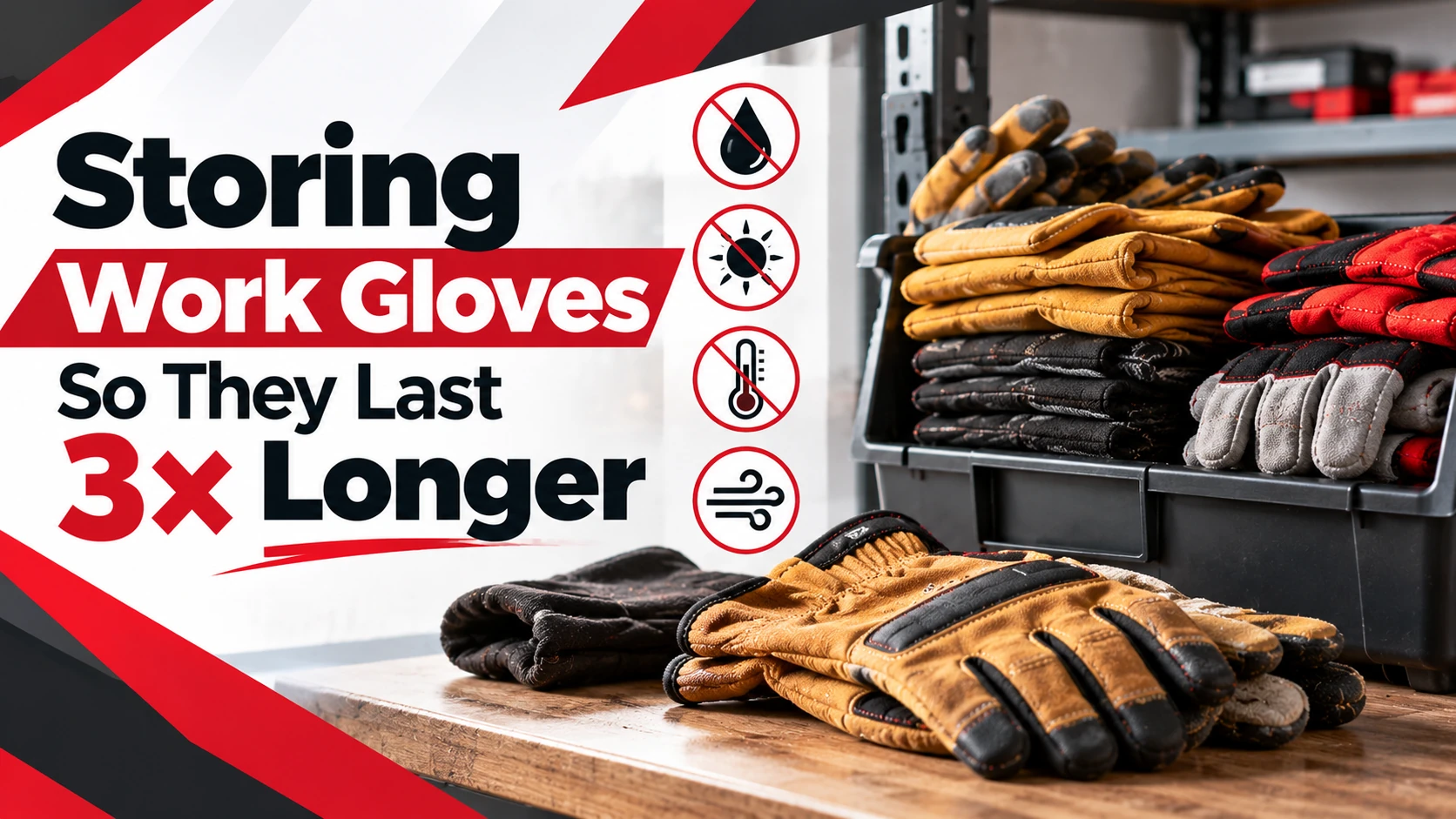
Storing Work Gloves So They Last 3× Longer

Work gloves are an important part of workplace safety. They protect workers' hands during construction, material handling, manufacturing, and other industrial tasks. However, even good-quality gloves can wear out faster when they are not cleaned, dried, or stored correctly.
Many workers focus on choosing the right gloves but overlook how they store them after use. Leaving gloves in a hot vehicle, keeping them wet inside a toolbox, or folding them tightly for long periods can damage their materials and reduce their useful life.
The good news is that proper storage does not have to be complicated. A few simple habits can help keep reusable work gloves in better condition, reduce unnecessary replacements, and protect your investment.
In this guide, we explain how to store work gloves properly, how different materials require different care, and which storage mistakes you should avoid. If you are still deciding which pair to buy, our guide on how to choose construction work gloves is a good place to start.
Why Proper Work Glove Storage Matters
Correct storage helps maintain the condition of work gloves between shifts and during periods when they are not in use.
Heat, sunlight, moisture, dirt, and poor handling can affect glove materials. Leather may become stiff or cracked, while some synthetic coatings can deteriorate after prolonged exposure to unsuitable conditions.
Here are some benefits of proper glove storage:
- Helps reduce premature wear and material damage.
- Keeps reusable gloves cleaner between uses.
- Helps prevent unwanted moisture, mildew, and unpleasant odors.
- Maintains the shape and comfort of gloves.
- Makes it easier to identify damaged or contaminated pairs.
- Helps businesses manage glove inventory more efficiently.
Important: Proper storage can help extend the useful life of work gloves, but it cannot guarantee that every pair will last three times longer. Actual lifespan depends on the glove material, working conditions, cleaning routine, and manufacturer's instructions.
1. Clean Your Work Gloves Before Storing Them
One of the easiest ways to care for reusable work gloves is to remove dirt and debris before putting them away.
Dust, mud, sweat, oils, and other residues can build up during a working shift. If these materials remain on the gloves for long periods, they may affect comfort, cleanliness, and material condition.
The correct cleaning method depends on the type of glove.
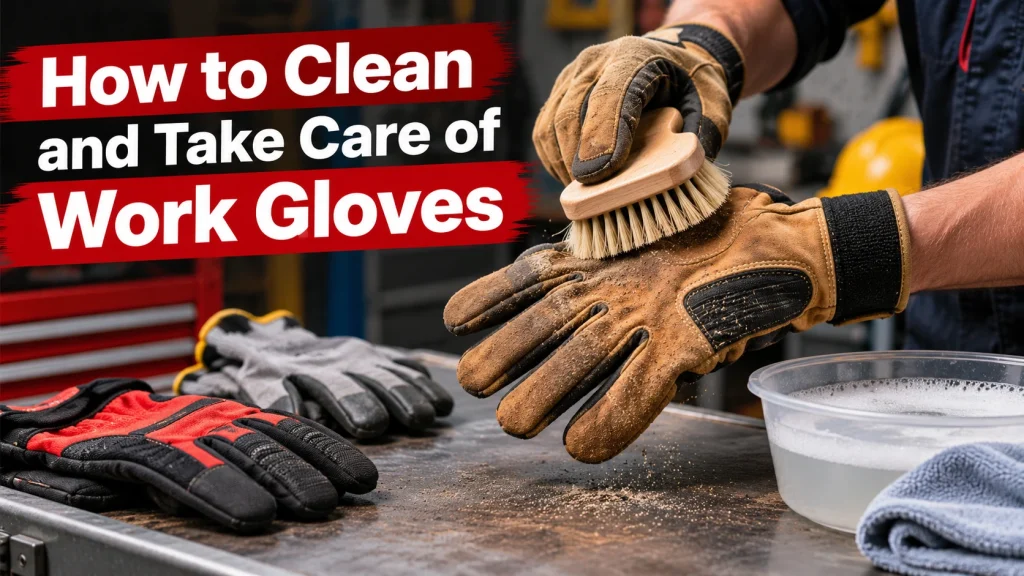
How to Clean Leather Work Gloves
Leather gloves need special care because excessive water, harsh detergents, and unsuitable cleaning products can remove natural oils and make the leather stiff.
Follow these basic steps:
- Brush away loose dirt using a soft brush.
- Wipe the surface with a slightly damp cloth if necessary.
- Use a leather cleaner when recommended by the manufacturer.
- Avoid soaking the gloves in water.
- Allow them to dry naturally at room temperature.
For long-term care, use a suitable leather conditioner only when needed and according to the manufacturer's recommendations.
Learn more about how to care for leather work gloves to understand the cleaning and conditioning methods that help maintain leather flexibility.
How to Clean Fabric and Coated Work Gloves
Fabric, knitted, nitrile-coated, latex-coated, and polyurethane-coated gloves may require different cleaning methods.
Before washing them:
- Check the care instructions on the product label.
- Use a suitable mild detergent only when permitted.
- Avoid bleach, harsh chemicals, and excessive heat unless specifically approved.
- Rinse properly if washing is permitted.
- Check that the gloves are not damaged after cleaning.
Never assume that all coated gloves are machine washable. Some coatings and liners can lose their performance if cleaned incorrectly.
2. Make Sure Gloves Are Completely Dry Before Storage
Moisture is one of the most common problems when storing reusable work gloves.
Gloves may become wet from rain, washing, sweat, or contact with damp materials. Storing them while they are still wet can encourage mildew, unpleasant odors, and material deterioration.
Follow these steps to dry gloves correctly:
- Open the cuffs to improve airflow.
- Place the gloves in a well-ventilated area.
- Keep them away from direct sunlight and strong heat.
- Allow the inside and outside to dry completely.
- Check the fingers and palm before putting the gloves away.
Avoid drying leather gloves on radiators, heaters, or hot vehicle dashboards. Excessive heat can cause leather to stiffen and may damage some coatings.
If gloves become heavily soaked, give them enough time to dry fully before reuse, following the manufacturer's care instructions.
3. Store Work Gloves Away From Direct Sunlight
Sunlight may seem harmless, but prolonged exposure to ultraviolet light can damage some synthetic fibers, coatings, and other glove materials.
Leaving gloves on a sunny windowsill, vehicle dashboard, or outdoor workbench for long periods can contribute to premature deterioration.
To protect your gloves:
- Use a shaded storage area.
- Keep gloves inside a suitable cabinet or covered storage container.
- Avoid leaving them on outdoor work surfaces.
- Protect unused stock from direct sunlight during transport and storage.
A cool, shaded location is generally a better choice than an exposed area that becomes hot during the day.
4. Keep Work Gloves Away From Excessive Heat
High temperatures can affect the flexibility and performance of certain glove materials.
For example, leather can become dry and stiff, while some rubber and synthetic coatings may deteriorate under unsuitable storage conditions.
Avoid keeping gloves near:
- Radiators and heaters.
- Hot machinery.
- Vehicle dashboards exposed to sunlight.
- Industrial equipment that produces excessive heat.
- Other heat sources that exceed the manufacturer's storage recommendations.
For businesses storing large quantities of safety gloves, choose an indoor storage area with stable environmental conditions whenever possible.
Always follow the storage temperature limits provided by the manufacturer, particularly for specialist protective gloves.
5. Choose a Clean, Dry, and Well-Ventilated Storage Area
The best place to store work gloves is generally clean, dry, shaded, and protected from contamination.
A suitable storage area helps protect gloves from unnecessary exposure to dust, moisture, sunlight, and other environmental conditions.
Good storage options include:
- A clean workplace locker.
- A dedicated glove storage cabinet.
- A dry shelf inside a warehouse.
- A suitable ventilated storage organizer.
- A clean drawer away from chemicals and heat sources.
Avoid placing gloves directly on damp floors or against walls where moisture can collect.
In humid environments, allow sufficient airflow and check stored gloves regularly for signs of moisture or mildew. Do not seal damp gloves inside airtight containers.
6. Store Gloves in Their Natural Shape
How you position your gloves during storage also matters.
Folding, crushing, or tightly packing gloves for long periods can place unnecessary stress on some materials and coatings. Deep creases may contribute to cracking in certain coated gloves, while leather gloves can lose their shape if stored under heavy objects.
To avoid these problems:
- Lay gloves flat when practical.
- Stack them loosely instead of compressing them.
- Keep heavy tools and equipment off stored gloves.
- Avoid forcing gloves into small containers.
- Store leather gloves in a way that helps preserve their natural shape.
For reusable leather safety gloves, suitable storage can help maintain flexibility and reduce unnecessary stress on the leather and seams.
Need durable leather safety gloves built to last? Browse our full range made in Sialkot.
Explore Our Leather Safety Gloves7. Store Different Types of Work Gloves Correctly
Not every glove should be stored in exactly the same way. The correct method depends on its material and protective function.
| Glove type | Recommended storage practice |
|---|---|
| Leather work gloves | Keep clean and dry, away from excessive heat, and store without crushing |
| Cut-resistant knitted gloves | Protect from sunlight, moisture, and damaging chemicals |
| Nitrile-coated gloves | Keep in a cool, dry location and away from direct sunlight |
| Latex-coated gloves | Follow manufacturer instructions and protect from unsuitable heat and light |
| PU-coated gloves | Store flat or loosely and avoid damaging folds or compression |
| Specialist protective gloves | Follow the specific storage and inspection requirements provided by the manufacturer |
These are general recommendations. Always follow the product's care instructions because glove construction, coatings, and protective ratings vary.
For example, gloves designed for chemical handling, electrical work, or heat protection may have additional storage and inspection requirements. Protective ratings also differ between products, so it helps to understand what the numbers on your work gloves mean before you decide how to store and use each pair.
8. Organize Your Glove Inventory and Rotate Stock
Proper storage is especially important for construction companies, industrial facilities, wholesalers, and safety equipment distributors.
When many pairs are stored together, poor organization can lead to damaged stock, unnecessary waste, and difficulty identifying older products.
A simple inventory system can help.
Use the First-In, First-Out Method
The first-in, first-out (FIFO) method means issuing older stock before newer stock, provided the older products remain within their specified storage period and are still suitable for use.
To implement FIFO:
- Record the date when each batch arrives.
- Label cartons or storage locations clearly.
- Place older stock where it can be issued first.
- Keep new deliveries behind existing stock.
- Check packaging and product condition during stock inspections.
Remember that FIFO does not override a manufacturer's expiry date, shelf-life limit, or inspection requirement.
Separate New, Used, and Damaged Gloves
Keep unused stock separate from gloves that have already been worn.
Create clearly identified areas for:
- New gloves ready for issue.
- Reusable gloves awaiting cleaning or drying.
- Gloves requiring inspection.
- Contaminated or damaged gloves that must not be returned to normal use.
This system helps reduce mix-ups and makes it easier for workers to select suitable gloves.
9. Inspect Stored Gloves Before Reuse
Proper storage cannot repair gloves that are already damaged. Before each use, inspect your gloves for signs of wear.
Check for:
- Holes, cuts, or tears.
- Loose stitching or damaged seams.
- Cracked or peeling coatings.
- Stiff or brittle leather.
- Unusual discoloration or contamination.
- Loss of grip or damaged protective components.
If a glove has damage that affects its protective performance, remove it from service and replace it as required.
Do not continue using damaged gloves for tasks that require cut, puncture, chemical, or other specific protection. Follow workplace procedures and the manufacturer's recommendations for inspection and replacement.
Read our guide on when to replace damaged work gloves to learn which warning signs should not be ignored.
10. Common Work Glove Storage Mistakes to Avoid
Even good-quality gloves can deteriorate faster when basic storage practices are ignored.
Here are some common mistakes to avoid:
- Storing wet gloves: Moisture can encourage mildew and unpleasant odors. Allow reusable gloves to dry completely before storing.
- Leaving gloves in a hot vehicle: Vehicle interiors can become very hot in sunlight. Choose a more suitable storage location.
- Keeping gloves in direct sunlight: Prolonged UV exposure can damage some glove materials and coatings.
- Using harsh cleaning products: Bleach, solvents, and unsuitable detergents may damage certain materials. Follow the care label.
- Compressing gloves under heavy objects: Excessive pressure can deform gloves and damage some protective components.
- Mixing contaminated gloves with clean stock: Keep contaminated or damaged pairs separate to prevent them from returning to normal use.
- Ignoring manufacturer instructions: Different materials have different storage needs. Always follow the instructions supplied with the product.
Avoiding these mistakes can help businesses maintain better glove condition and reduce unnecessary replacement costs.
11. How Proper Storage Helps Businesses Save Money
For companies that purchase safety gloves in bulk, unnecessary glove replacement can increase operating costs.
Poor storage may damage unused stock before it reaches workers. Disorganized inventory can also result in lost products, forgotten cartons, or damaged gloves being issued by mistake.
A practical storage system helps businesses:
- Reduce avoidable damage to unused stock.
- Improve stock rotation and organization.
- Identify damaged products earlier.
- Maintain cleaner storage areas.
- Plan glove purchases more efficiently.
- Reduce unnecessary waste.
However, cost savings should never come at the expense of hand protection. Gloves must be replaced whenever they no longer provide the required protection, regardless of their age or purchase price.
Conclusion
Storing work gloves properly is a simple way to help maintain their condition and get more useful life from reusable protective equipment.
Clean gloves according to their material, allow them to dry completely, keep them away from direct sunlight and excessive heat, and store them in a clean, dry place. Businesses should also organize stock, rotate inventory, and inspect gloves before use.
There is no single storage method that guarantees every pair will last three times longer. However, following the right care routine can help reduce avoidable damage and support more efficient glove management.
At Shakeel & Sons, we understand the importance of suitable hand protection for industrial and workplace applications. Businesses sourcing leather safety gloves in bulk can explore our product range and discuss their requirements with our team.
Looking for leather safety gloves for your business? Contact Shakeel & Sons to discuss product options and bulk purchasing requirements.
Contact Shakeel & Sons